This article is part of ZenMarket’s quarterly giveaway for new users. Click the banner below and sign up for a chance to win 20,000 ZenPoints!

When many people think of used goods, they imagine wear and tear. In Japan, it’s usually the opposite.
A key reason is the cultural mindset of mottainai (“waste not, want not”), which encourages people to take exceptional care of their belongings. Items are maintained with resale in mind, often kept in near-perfect condition for years.
A culture based on care and trust

This habit starts young. Children are taught responsibility, cleaning, and respect for their possessions both at school and at home. That mindset carries into adulthood and into the secondhand market.
As a result, buyers trust what they’re purchasing. Over the past decade, Japan’s resale market has grown rapidly, with everything from manga and games to fashion and collectibles thriving.
For many outside Japan, “unboxed” can imply damage. In Japan, that assumption simply doesn’t hold up.
Unboxed or not, the quality remains the same
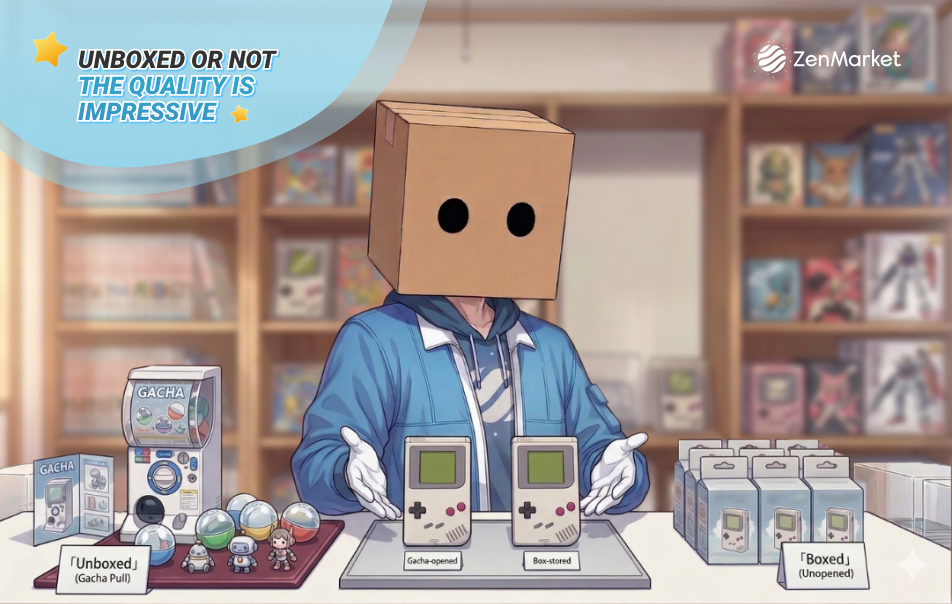
So what’s the real difference between boxed and unboxed items in Japan? Surprisingly little.
While boxed items are expected to be flawless, unboxed goods are often just as pristine, sometimes indistinguishable from new.
A big reason for this is the popularity of blind boxes and gacha. Collectors frequently open items only to check the contents. If they don’t get what they want, they resell it immediately.
That means many “used” items have barely been handled at all, opened once, then stored away.
Japan’s Grading System: Strict to the point of perfection
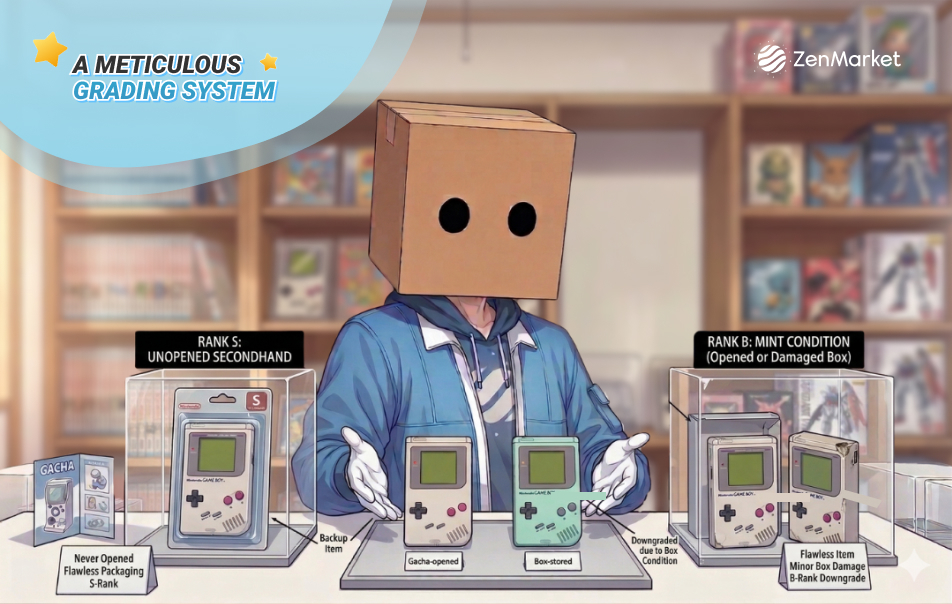
If you’ve browsed Japanese resale sites, you’ve likely seen their grading system.
The difference between “New” and “Mint” comes down to extremely high standards. Even minor box damage can drop an item from the top rank.
-
S Rank: Like new, often unopened
-
A–B Rank: Excellent condition with minor flaws
-
C Rank: Noticeable wear
Even unopened “backup” items (duplicates bought by collectors) are labeled as secondhand simply because they’ve had a previous owner.
It’s a system that prioritizes transparency and builds trust.
High-quality products = Long lifespans
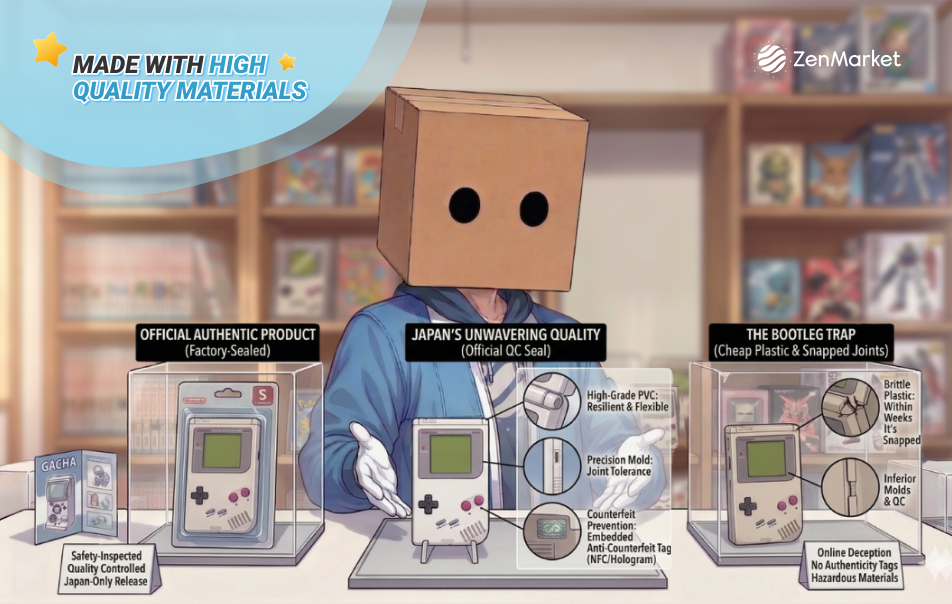
Another factor? The products themselves.
Japanese goods are known for strong materials, careful manufacturing, and strict quality control. From safety regulations to detailed inspections, products are built to last.
That means even secondhand items hold up extremely well over time, whether they’re figures, accessories, or collectibles.
But what about bootlegs? Japan has a very strict counterfeit law. We talked about this in our previous article: Most anime fans buy merch the wrong way.
You can also learn how to train your eye on how to spot fakes here:
https://zenmarket.jp/en/blog/post/14142/how-to-tell-fake-bootleg-anime-figures
A massive market with constant turnover equals more options!
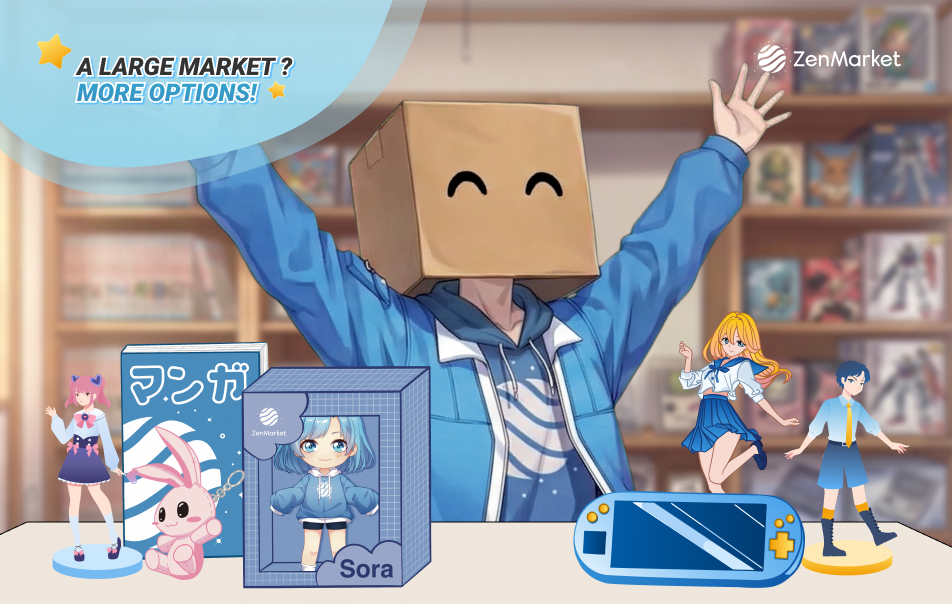
Japan releases new products at a staggering pace, especially in the pop culture market.
At the same time, living spaces are often limited. This creates a cycle: people regularly sell items to make room for new ones.
The result? A huge supply of high-quality secondhand goods is entering the market every day.
Platforms like Mercari are constantly updated, making it easy to find incredible deals, often at a fraction of retail price.
So, how do you buy from Japan?

You don’t need to live in Japan to access this market.
Proxy services act as a bridge, letting you shop from Japanese platforms without needing a local address or language skills.
With a service like ZenMarket, you can:
-
Browse and buy from Japanese marketplaces
-
Store multiple items in a warehouse
-
Ship everything together to save on costs
Want to try it yourself?
Sign up, explore the market, and experience just how good “used” can be.
This article is part of ZenMarket’s quarterly giveaway for new users. Sign up using the link below, then return to the campaign page to submit your entry.