Apr 25, 2026
"Finishing a bad book just because you started it is like finishing a meal that tastes like soap just because you paid for it."
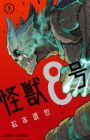
I mentioned that I would try reading Volume 1 of Rooster Fighter, but I've noticed that I'm more inclined to pick up something else lately. However, I made a commitment to read the first few chapters. First, I find it puzzling how a chicken can suddenly fight a huge demon or monster—and how it can even talk. If the setting were populated with anthropomorphic animals, a talking chicken would seem more fitting, but that’s not the case here. The story doesn't explain
...
the presence of the monster or demon, nor does it clarify why or how the chicken can fight it. It starts off with the chicken living a normal daily life, then it comes across a monster and decides to challenge it to a fight without any explanation.
Critical Error: No "Origin Code" or explanation of why the "System" is producing demons.
Logic Leak: No training arc, no mutation, etc. A chicken’s physical mass vs. a demon’s mass is a Scaling Failure.
Biological Error: Unless it's an anthropomorphic world, a chicken lacks the vocal cords for human speech. This is a Hardware Incompatibility.
Behavioral Bug: Animals (and humans) usually have a "Flight or Fight" response based on size. A rooster attacking a building-sized monster without a reason is Irrationally Programmed.
I reviewed Chapter 3 to confirm my thoughts, and I stand by my conclusion. The rooster is capable of defeating a huge monster, yet it nearly drowns in a pond of water. Why is that? Shouldn’t the opposite be true? Water is not particularly dangerous, while facing a monster is certainly a significant threat.
Variable A (Monster): High Danger --> Victory.
Variable B (Pond): Low Danger --> Near Death.
Result: There is no logic. The "Math" of the world is non-existent.
When a child sees a rooster in the rare birds area of a zoo, another child tells them that it’s probably not a rooster, but rather a rare bird. This second child lacks common sense, as they don’t even know what a rooster is. This type of writing can be described as "lazy" because it depends on characters being unrealistically ignorant to drive the plot or create a joke. In "Rooster Fighter," the characters lack basic general knowledge, making the world feel cartoonish, where the rules can change at the author’s whim for the sake of humor.
When the employee responsible for the rare birds area sees the rooster, she thinks she might be hallucinating or seeing things that aren't there. This is puzzling because she doesn't suffer from heatstroke or low blood sugar. This scenario is a classic case of narrative gaslighting. In a high-fidelity system, a character’s reaction should be informed by their biological state or professional expertise. By making the employee doubt her own perception, the author imposes a "comical" reaction that goes against basic human psychology. If an expert in a specific field encounters something out of the ordinary, their first instinct is to correct the situation, not to doubt themselves. Hallucinations are typically a result of a hardware failure, meaning the brain misinterprets signals. People do not simply hallucinate a vividly detailed, 4K-resolution rooster just because it’s unexpected. If someone can see, hear, and touch something, it is not a hallucination. She's literally being paid to interact with birds, how can she be dumb with birds?
The Surprise Variable: If you see a polar bear in your bathtub, you don't think you're "seeing things"; you think, "How did a bear get in my house?" * The Employee’s Job: She is literally paid to look at birds. If she can't trust her eyes to identify a bird, she is Statistically Unfit for her position.
A macaw thought, “This guy is such a pain in the tailfeathers”, while the rooster believed the worm was delicious. However, tailfeathers cannot feel pain. In a world where all the characters are birds, their idioms and sensory descriptions should align with their anatomy. Using the phrase "pain in the tailfeathers" isn't just a poor joke; it demonstrates a logical inconsistency and suggests that the author doesn't fully respect the biopunk or animal reality of this world. Feathers are made of keratin (similar to human hair and nails). While the feather follicles (skin) can feel pressure, the feathers themselves are dead tissue. It seems the author is merely "copy-pasting" human slang onto birds.
Here’s the most frustrating aspect: When the employee spots a rooster in the rare birds area, she thinks she's hallucinating. Yet, when a monster appears, she doesn’t question her sanity; she accepts that there’s a monster. Logically, this should be reversed. A rooster is a mundane, biological reality, while a building-sized monster is a supernatural anomaly. If the employee were to doubt her sanity, it should be regarding the 100-foot demon, not the 1-foot farm bird. In psychology, there's a concept called Cognitive Dissonance. Generally, when something small is out of place (like a rooster in a zoo), the brain quickly integrates it with the thought: "Oh, a bird got in." However, when something massive and impossible occurs (like a monster), that’s when the brain enters a state of shock or hallucination because it struggles to process the overwhelming information. By having the character accept the monster while doubting the rooster, the author suggests that the world lacks an internal baseline. The characters aren't reacting to reality; instead, they’re responding to the genre. They know they are in a "Monster Manga," so they accept the existence of monsters. Conversely, they behave foolishly about the rooster, as if they are in a "Comedy Manga." This reflects Selective Realism: where the rules of logic are only applied when they’re convenient for a joke.
Why would rare birds and a rooster decide to attack monsters? How can a rooster’s resonance shatter these creatures? The notion that a rooster can produce a sound strong enough to "shatter" a monster suggests the use of a Sonic Weaponry System. For sound to shatter a solid object through resonance, its frequency must precisely match the object's natural vibration frequency, and the amplitude (or volume) must be sufficiently high to overcome the material’s structural integrity. The challenge lies in the fact that a rooster is a small biological unit. To generate enough decibels to shatter a building-sized monster, the rooster’s internal organs and beak would likely be damaged or destroyed by the sound pressure. Without "augmentation" or "magic" to explain why the rooster would be immune to its own sonic blast, the physics of this scenario fall apart. Additionally, birds are generally fragile, so they would more likely choose to escape rather than confront a monster.
Maybe that's why the library only has volume 1 and not more volumes.
Reviewer’s Rating: 2
What did you think of this review?
Nice
 0
0
Love it
 0
0
Funny
 0
0
Confusing
 0
0
Well-written
 0
0
Creative
 0
0Show all


 Read Manga
.jpg?ver=d8cccfbbb6c297b35f9c6ec19ed56a186b7c3c1e)



.png)